
Small Business Ideas for Tradies in New Zealand
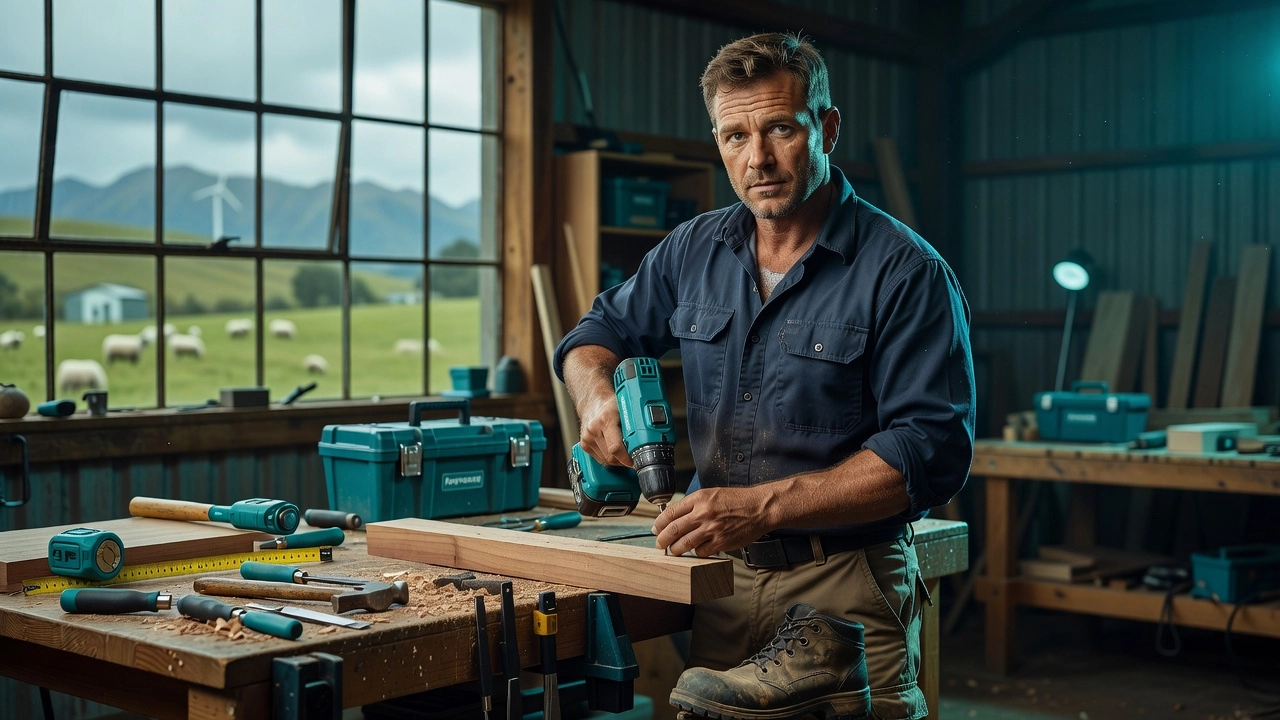
So you've got the skills, the tools, and the work ethic. But have you ever thought about turning your trade into something more than just a job? Whether you're a sparky, a plumber, a builder, or a chippy, New Zealand's booming construction and home services industry is packed with opportunity for people just like you.
The good news is that exploring small business ideas doesn't have to be overwhelming or complicated. Plenty of tradies across New Zealand have made the leap from employee to business owner, and many of them started with nothing more than a ute, a phone, and a solid reputation.
In this post, we've put together a practical list of small business ideas tailored specifically for tradies in New Zealand. Whether you're just starting to think about going out on your own or you're ready to take the plunge, there's something here for every skill level and budget. By the time you finish reading, you'll have a clear picture of your options and maybe even find the idea that feels just right for you. Let's get into it.
Why New Zealand Is a Strong Market for Trade Businesses Right Now
If you're thinking about starting a trade business in New Zealand, the timing is genuinely good. The country faces a shortage of around 60,000 construction workers against a $60 billion infrastructure pipeline covering roads, hospitals, schools, and homes. That gap between supply and demand is not a short-term blip. It reflects years of underinvestment in apprenticeships and training, and it means skilled tradies across plumbing, electrical, building, and specialist categories are consistently in demand right across the country.
The existing housing stock adds another layer of opportunity. Auckland, Wellington, Hamilton, and Christchurch all have substantial portions of older homes that need ongoing maintenance, weathertightness remediation, rewiring, replumbing, and compliance upgrades. Homeowners cannot defer this work indefinitely, which means the renovation and repair pipeline keeps refilling regardless of what the property market is doing.
New specialist categories are growing fast too. Heat pump installations, solar panel setups, and EV charger fitting are all accelerating as New Zealand households and businesses shift toward cleaner energy. These jobs require licensed tradespeople, the margins tend to be solid, and the customer base is expanding every year.
The subcontract opportunity from government and private infrastructure projects is another long-run tailwind for smaller operators. If New Zealand is serious about building the homes, roads, schools, and hospitals it needs, that work has to flow through to sole traders and small teams on the ground.
The tradies who will compound these advantages fastest are the ones who treat their business systems as seriously as their trade skills. Digital adoption and cash flow management are the two biggest priorities for New Zealand small business owners heading into 2026. Getting the right tools in place now, before your competitors do, is how a busy tradie turns a strong market into a genuinely great business.
1. Plumbing Business
Plumbing is one of those trades where the work simply never stops. Whether it is a burst pipe at midnight, a hot water cylinder giving up in winter, or a developer needing full fitouts across a new subdivision, demand for licensed plumbers runs strong across every region of New Zealand, all year round. With plumbing industry growth continuing to track upward globally and NZ's own construction pipeline showing no signs of slowing, there has rarely been a better time to build a plumbing business of your own.
Before you go out on your own, though, there is one non-negotiable: you need Certifying Plumber registration through the Plumbers, Gasfitters and Drainlayers Board (PGDB). This is the statutory regulator for the trade in NZ, and operating without it is a serious offence. The PGDB has fined individuals thousands of dollars for completing unlicensed work, so getting your registration sorted before you start trading independently is simply not optional.
Once you are registered and trading, the recurring revenue potential is genuinely exciting. Maintenance contracts with landlords, property managers, and commercial clients can generate steady monthly income well beyond one-off call-outs. Annual compliance checks, hot water servicing, and regular inspection schedules all add up to reliable cash flow that smooths out the quiet weeks.
Here is where it gets interesting for your bottom line: most plumbing jobs in NZ are still won over the phone. A minor repair might bring in $300, while a bathroom fitout or hot water system replacement can easily hit $5,000 or more. That means every missed call is not just an inconvenience, it is real money walking out the door. When you are under a house or mid-job on a roof, answering every call is impossible. Tools like Swoopd solve this directly, texting callers back on WhatsApp within seconds to capture the job details and lock the booking in before the customer rings the next plumber on the list.
2. Electrical Contracting Business

Electricians are among the most in-demand tradies across New Zealand right now, and the gap between supply and demand is only widening. Waitlists in Auckland, Wellington, and Christchurch are common, with some residential customers waiting weeks just to get a quote. If you are a qualified sparky thinking about going out on your own, the market conditions are genuinely in your favour.
Before you take on independent work, you need to be across your registration requirements. The Electrical Workers Registration Board (EWRB) governs who can legally carry out and certify electrical work in New Zealand. Independent contractors typically need a practising licence and the ability to certify prescribed electrical work, so it pays to check the current EWRB requirements carefully before you set up your business structure.
Two sub-niches are growing faster than almost anything else in the electrical trade right now. The first is EV charger installation. As more Kiwi households switch to electric vehicles, homeowners need certified electricians to install dedicated home charging points safely. The second is solar panel wiring and grid connection. Rising power prices and growing interest in government incentive schemes are pushing more homeowners toward solar, but the industry is short on qualified installers. Skills Trades NZ has expanded solar-specific micro-credentials across 12 campuses nationally to try to close that gap, which tells you everything about how real the opportunity is.
Commercial and industrial clients are worth pursuing too, because they tend to book large, recurring projects rather than one-off call-outs. Landing a facility management contract or a regular commercial maintenance agreement can anchor your revenue for months at a time. That kind of work rewards reliability and good communication as much as technical skill. Missing a call from a facilities manager looking to schedule the next round of work is the sort of thing that quietly costs you a contract renewal without you ever knowing why. Tools like Swoopd can automatically text back any missed call within seconds, keeping those relationships warm even when you are up a ladder.
3. Heat Pump Installation and Servicing
Heat pump installation has become one of the most reliably busy trade businesses in New Zealand, and the reason comes down to one word: legislation. The Healthy Homes Standards required all rental properties to meet minimum heating requirements by 1 July 2025, covering nearly 600,000 rental households across the country. Landlords who failed to comply faced penalties of up to $7,200 under the Residential Tenancies Act. That kind of regulatory pressure does not create optional demand; it creates a mandated one, and qualified installers have been busy as a result.
The key word there is qualified. To legally handle refrigerants in New Zealand, you need a Refrigerant Handling Licence. This credential is not just a box to tick; it is the barrier to entry that lets you charge premium rates for installation, servicing, and decommissioning work. Unlicensed operators simply cannot do the job legally, which keeps the market cleaner and protects your pricing.
Beyond installation, the real money is in ongoing servicing. Heat pumps require correct sizing, proper installation, and regular maintenance to meet the Healthy Homes standard throughout a tenancy. Annual maintenance contracts covering filter cleans, coil checks, and refrigerant top-ups give you predictable recurring revenue rather than a feast-and-famine install cycle. A portfolio of 50 service contracts at $200 each adds $10,000 a year before you book a single new installation.
Builders and renovation contractors are also a fantastic referral source. Almost every kitchen or lounge renovation triggers a conversation about heating, and builders need someone reliable they can hand off to. Get those relationships right and the leads come to you.
One final thing worth knowing: broken heat pumps in winter are genuine emergencies. Customers call three or four installers and book whoever gets back to them first. If you miss that call while you're up a ladder, you lose the job. A tool like Swoopd texts the caller back within seconds on WhatsApp, finds out what they need, and locks in a booking before your competitors even listen to their voicemail.
4. Licensed Building Practitioner (LBP) Business
If you hold an LBP licence or are working toward one, you are sitting on a genuinely strong business foundation. The Licensed Building Practitioner scheme, administered by MBIE under the Building Act 2004, is not optional for restricted building work. Structural work, cladding, roofing, and foundations all require an LBP to carry out or supervise the job legally. That barrier to entry is actually good news for anyone who has gone through the process, because it filters out the unlicensed operators and gives homeowners a reason to specifically seek you out. MBIE actively promotes the scheme to consumers, reminding homeowners to verify LBP credentials before any build or renovation begins, so your licence number is a marketing asset as much as it is a compliance tick.
The residential renovation market is pulling in strong demand right now. With property prices staying high and many homeowners sitting on solid equity, the calculation to renovate rather than buy and move has become compelling. Deck builds, kitchen extensions, and bathroom renovations sit at the sweeter end of the project mix. They are high-margin, relatively fast to complete, and incredibly referable. One happy kitchen client tells three neighbours, and suddenly your calendar is full without spending a cent on advertising.
A smart way to start is by subcontracting to larger builders or project managers while you build your own direct client base on the side. You get steady cash flow from day one, build site relationships, and learn how bigger jobs are managed, all while quietly generating your own leads.
Where most new LBP businesses lose jobs is at the enquiry stage. Homeowners typically call two or three builders and book whoever responds first with a clear, professional quote. If you miss that first call because you are on the tools, and you do not follow up fast, the job is gone. A tool like Swoopd texts callers back automatically on WhatsApp within seconds, captures the job details, and locks in a booking while you keep working.
5. Roofing Business
Roofing is one of the highest-value trade businesses you can start in New Zealand, and the numbers back that up. A full re-roof on a typical New Zealand home can run anywhere from $15,000 to $30,000 or more depending on size, pitch, and materials. That puts individual job revenue well above what most maintenance trades earn per visit. With 1,716 roofing businesses registered across New Zealand as of early 2025, the market is active but far from saturated, especially outside Auckland. Regional centres like Marlborough, Gisborne, and the West Coast each have fewer than ten registered roofing businesses, which means genuine white space for someone willing to set up away from the main centres.
The demand side of this business is strong and only getting stronger. New Zealand's housing stock is ageing, and a large proportion of homes have iron or shingle roofing that is approaching or well past its expected lifespan. Deferred maintenance does not just mean a leaky ceiling; it compounds into structural damage, which creates urgency for homeowners and often turns a repair job into a full replacement. That aging stock is not going away any time soon, which means roofers entering the market now are positioning themselves in front of a long runway of work.
Storm damage adds another layer of opportunity. When a weather event rolls through, phones start ringing fast. Roofers who pick up, or who have a system that responds immediately to missed calls, capture that work before anyone else does. Speed of response in the hours after a storm can be the difference between a booked job and a lost one.
On the cost side, roofing compares favourably to many other trades at startup. Most materials are purchased per job rather than held as stock, which keeps your initial outlay low.
Insurance repair work through private insurers and EQC-adjacent claims also provides a reliable secondary revenue stream that can carry you through quieter discretionary-spend periods, smoothing out the seasonal dips that catch newer businesses off guard.
6. Gasfitting or Drainlaying Business
Gasfitting and drainlaying sit in a sweet spot that not enough people talk about when they consider trade businesses in New Zealand. Both are licensed trades regulated by the Plumbers, Gasfitters and Drainlayers Board, and both require restricted work to be carried out by a registered practitioner. To run your own independent operation and sign off on your own work, you need to reach Certifying level, either Certifying Gasfitter or Certifying Drainlayer. That barrier is actually a good thing for business owners, because it limits the number of people who can legally compete with you.
Gasfitters are in strong demand right now across several distinct markets. Home heating upgrades, commercial kitchen fitouts, and LPG appliance installation in rural and lifestyle blocks all generate consistent work. If you are based outside the main centres, the LPG market alone can keep a sole trader busy year-round, because many lifestyle properties sit beyond the reticulated gas network and rely on bottled or bulk LPG for cooking, heating, and hot water.
Drainlaying tells a slightly different story. Demand tracks the construction pipeline closely, because every new build and major renovation needs drainage work before anything else can happen. That connection to new builds means income tends to be steadier than trades driven by emergency callouts or seasonal weather.
One of the quieter advantages in both trades is that sole-trader operators are comparatively rare. There are simply fewer independent gasfitters and drainlayers than there are plumbers or electricians, which means less competition and stronger day rates. The Ask For Licensed campaign run by the PGDB is also actively educating homeowners to check credentials before hiring, which pushes more enquiries toward registered operators like you.
Bundling your licences is a smart move that many experienced NZ tradies take. Holding both a plumbing and gasfitting registration, or combining plumbing with drainlaying, lets you quote for larger scopes of work and reduces how often a client needs to bring in a second contractor.
When the phone rings with a new job, missing that call can mean losing it entirely to a competitor who picks up. Swoopd texts callers straight back on WhatsApp within seconds, captures the job details, and books it into your calendar while you are busy under a house laying pipe.
7. Painting and Decorating Business
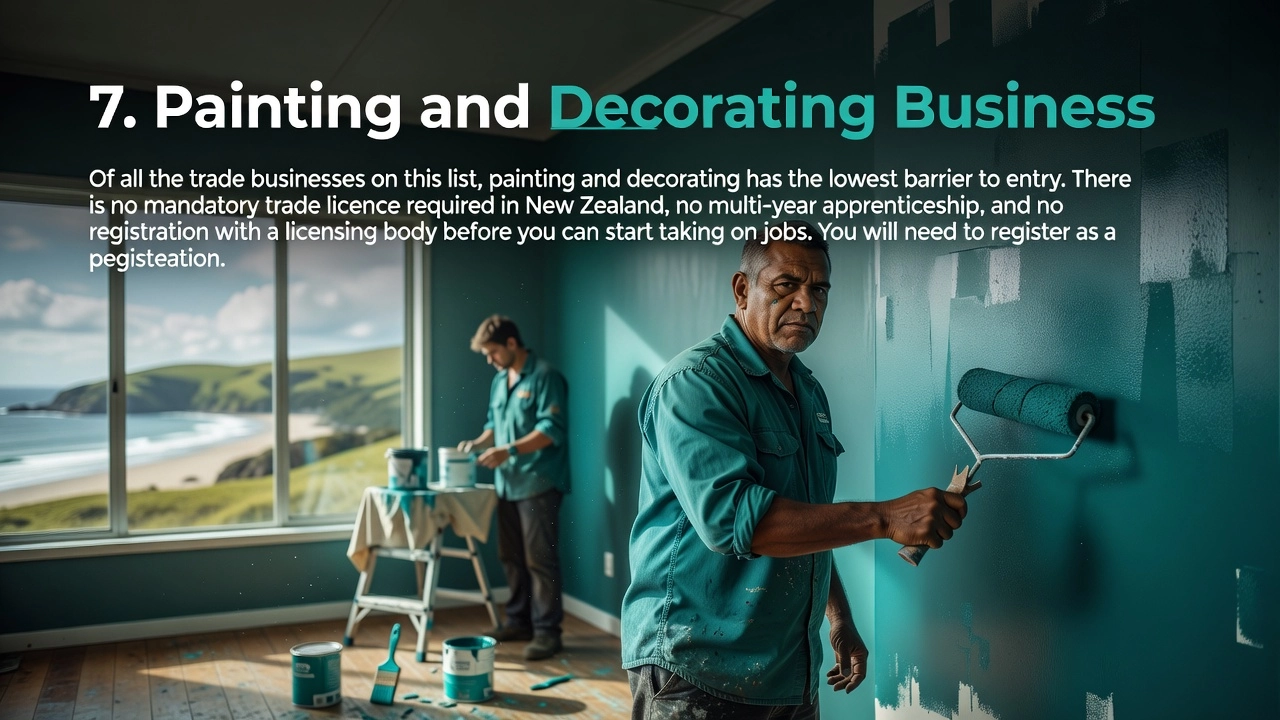
Of all the trade businesses on this list, painting and decorating has the lowest barrier to entry. There is no mandatory trade licence required in New Zealand, no multi-year apprenticeship, and no registration with a licensing body before you can start taking on jobs. You will need to register as a sole trader or company through the Companies Office, register for GST once you cross $60,000 in turnover, and take WorkSafe obligations seriously around working at heights and handling lead paint in older homes. But compared to the licensed trades covered earlier in this list, painting lets you start earning faster and with less upfront cost. Startup equipment, including brushes, rollers, drop sheets, a ladder, and a sprayer, typically runs between $3,000 and $10,000, making it genuinely one of the most affordable trade businesses to launch.
The smartest painting businesses in New Zealand build across three income streams: residential repaints, new build contracts, and commercial maintenance work. Each has a different rhythm. Residential repaints are relationship-driven with strong margins. New build contracts bring volume and predictability. Commercial and property management agreements create recurring income that smooths out the seasonal dips.
Seasonality is real. Exterior painting in New Zealand peaks from roughly October through April, so stacking interior jobs through winter is what keeps revenue consistent. Interior work, including rental turnovers, pre-sale refreshes, and commercial fit-outs, runs twelve months a year and fills the gaps.
The painting market also has a reputation problem that works in your favour. Many operators are unreliable, communicate poorly, and leave messy finishes. Simply showing up on time, doing clean prep work, and keeping clients updated puts you ahead of a large share of the competition.
Where painters lose jobs is in response speed. Homeowners looking for a painter almost always contact several businesses at once. The first tradie to respond professionally, give a clear timeline, and confirm a quote visit tends to win the job. A tool like Swoopd helps here by texting missed callers back immediately so you stay in the running even when you are up a ladder and cannot answer.
8. Handyman Business
A handyman business is one of the most flexible ways to go self-employed in the trades. If you are multi-skilled and comfortable switching between flat-pack furniture assembly, minor carpentry, fencing repairs, gutter clearing, and the kind of odd jobs that licensed tradies routinely turn away, you have a genuinely marketable skill set. The work is plentiful, the jobs are varied, and customers are often just looking for someone reliable who will actually show up.
One of the biggest draws here is accessibility. Unlike plumbing or electrical work, there is no mandatory licensing required in New Zealand for non-restricted handyman work. That keeps startup costs low. You need a solid set of tools, a vehicle, basic public liability insurance, and a phone. Many successful handyman businesses start with exactly that and build from there.
The client base is where this business really shines. Property managers, landlords, and real estate agents are some of the best repeat clients you can land. They need reliable people for ongoing maintenance, tenant changeover repairs, and pre-sale tidyups. Lock in a few property management relationships early and you will have a steady pipeline of smaller jobs that stack up fast across the week.
Enquiry volume tends to be high because homeowners search broadly and call the first available option. That is an advantage, but it also means missed calls cost you real work. When you are up a ladder or elbow-deep in a job, you cannot answer your phone, and the next person on Google gets the booking instead. A tool like Swoopd automatically texts missed callers back via WhatsApp within seconds, finds out what the job is and where, and books it straight into your calendar without you lifting a finger.
Scaling is also surprisingly straightforward once your systems are tight. Handyman work batches well by suburb, which means you can route a second operator efficiently without much planning overhead. Build the client base first, systematise the booking and quoting process, and adding a second person becomes a natural next step rather than a leap.
9. Commercial or Residential Cleaning Business
Cleaning is one of the most accessible small businesses on this entire list. Startup costs can be as low as $2,000 to $5,000 for a solid initial setup covering equipment, supplies, insurance, and basic marketing. You can often take on your first paid job within days of deciding to start, which means cash flow arrives almost immediately rather than weeks or months down the track.
End-of-tenancy cleaning is a particularly strong sub-niche in New Zealand right now. With a busy rental market across Auckland, Wellington, Christchurch, and most regional centres, properties turn over constantly and landlords need them cleaned to a bond-refund standard fast. These jobs are typically higher-margin than regular residential cleans, and if you cluster your bookings by suburb or street, you can knock out two or three end-of-tenancy jobs in a single day without wasting time driving across town.
Commercial cleaning contracts are where a cleaning business starts to feel genuinely stable. Winning a contract with an office, medical clinic, or school means predictable income landing in your account week after week, often without you needing to quote again or chase the customer. Many operators use one or two commercial anchors to cover fixed costs while they build out a residential client base on the side.
The tricky part is that when someone needs a cleaner, they usually ring or message two or three options at once and go with whoever gets back to them first. A missed call or a slow reply to a website enquiry is a lost job, plain and simple. Tools like Swoopd automatically text back missed callers within seconds, which means your business responds even when you are elbow-deep in a job.
Scaling a cleaning business is also more straightforward than most other trades. Hire one reliable staff member, systematise your scheduling and invoicing, and you have effectively doubled your capacity without doubling your hours.
10. Locksmith Business
Locksmithing might be the most urgency-driven trade business on this entire list. When someone is locked out of their house at 9pm, or a retailer needs a broken lock sorted before opening time, they are not scrolling through options and comparing quotes. They are calling the first locksmith who shows up in a Google search and hitting the call button immediately. Whoever answers, or calls back fastest, wins the job. It really is that simple.
The good news for anyone considering this business is that no mandatory licensing is required to operate as a locksmith in New Zealand. You can start trading without sitting a government exam or completing a formal apprenticeship. That said, joining the Master Locksmith Association is well worth considering, especially if you want to attract commercial clients. Property managers, retail chains, and facility operators want to see credentials before handing over a contract, and association membership gives you instant credibility that a sole trader without any formal backing simply cannot match.
On the revenue side, residential work covers lockouts, lock changes, key cutting, and security upgrades, and there is solid, consistent demand across all of it. Commercial work is where the rates climb significantly. Access control installation, master keying systems, and safe installation all command higher prices, and commercial clients tend to come back repeatedly with ongoing maintenance and upgrade work.
After-hours availability is genuinely worth building into your model from day one. Emergency callouts attract a premium, and the customers ringing at midnight are the least price-sensitive of anyone you will deal with.
One critical thing to get right early is your Google Business Profile. Most locksmith searches happen on mobile, are hyperlocal, and convert to a phone call within hours. Strong reviews and an optimised local listing are effectively your shopfront. When those calls come in and you are mid-job and cannot answer, a tool like Swoopd texts the caller back on WhatsApp within seconds, keeps the conversation going, and locks in the booking before they call someone else.
11. Solar Panel or EV Charger Installation
Solar and EV charging are two of the fastest-growing specialist categories available to licensed electricians in New Zealand right now, and the commercial case for both is genuinely compelling. Rising electricity prices are pushing homeowners to generate their own power, government clean energy incentives are reducing the upfront cost barrier for consumers, and EV uptake across New Zealand continues to climb. The result is a wave of residential enquiries that qualified electricians are well-positioned to capture.
Solar installation is not something just any sparkie can offer. From September 2025, the EWRB introduced a Mains Parallel Generation Systems licence endorsement, requiring electricians to complete NZQA-registered micro-credentials before they can legally connect solar PV or battery storage systems to the grid. The good news is that the training pathway is relatively short, with providers like Skills Group offering a three-day block course alongside self-paced online learning across campuses nationwide. For a licensed electrician already comfortable with residential installs, this is a low-friction way to unlock a premium service category with genuine market barriers keeping out less qualified operators.
EV charger installation sits alongside solar as a natural add-on service. Average job values typically land between $1,500 and $3,500 for a home charger installation, with relatively modest material costs compared to other electrical work. For an electrician already visiting a property, quoting an EV charger at the same time as any other job is a simple upsell conversation.
What makes both services particularly interesting from a business-building perspective is the word-of-mouth effect. Early adopters talk. When a neighbour sees a solar system going in next door or spots a new EV charger in a friend's garage, questions follow almost immediately. That referral dynamic is already playing out across New Zealand suburbs, and the installers building reputation now are the ones who will be fielding those referral calls for years to come. The market is still early enough that a well-positioned electrician can become the go-to name in their region before competition tightens significantly over the next two to three years.
NZ Licensing and Registration Requirements at a Glance
Before you commit to any of the businesses above, it is worth knowing exactly where you stand on licensing. Here is a quick-reference summary of what each trade requires in New Zealand.
Licensed Building Practitioner (LBP): If your work touches a home's structural integrity or weathertightness, such as framing, roofing, foundations, or cladding, it is classified as Restricted Building Work and you must hold a current LBP licence. Registration is managed through MBIE's LBP scheme, and the application process typically takes two to four months.
Electrical Workers Registration Board (EWRB): All independent electrical contracting work in New Zealand requires registration with the EWRB. You must carry your licence ID as proof of current competence, and working without registration is illegal.
Plumbers, Gasfitters and Drainlayers Board (PGDB): Restricted work in each of these three trades requires the relevant Certifying registration. A Certifying Plumber, Certifying Gasfitter, or Certifying Drainlayer registration is mandatory before you can legally carry out and sign off work in those categories.
Refrigerant Handling Licence: Heat pump installers and service technicians who handle refrigerants must hold a Refrigerant Handling Licence, administered through EECA.
Unlicensed trades (painting, handyman, cleaning, locksmithing): No mandatory trade licence applies, but you should still register as a sole trader or company with the Companies Office and hold public liability insurance as a minimum starting point.
The Biggest Threat to Any New Tradie Business (and How to Fix It)
There is a problem baked into every trade business from day one, and it does not matter how skilled you are or how competitive your pricing is. The moment you pick up your tools on a job, you are unavailable to the next customer trying to reach you. And that customer is not going to wait.
Think about the numbers for a second. If an average NZ tradie job is worth somewhere between $800 and $1,500, and you are missing just three to five calls a week while you are on site, that is anywhere from $2,400 to $7,500 in potential work disappearing every single week. Most of it goes straight to whoever picked up the phone instead of you. Over a year, that adds up to a figure that would make most sole traders feel genuinely sick. Research suggests the average small business loses around $126,000 annually to missed calls, and trades businesses have some of the highest missed call rates of any sector, precisely because the work demands you be somewhere else.
The caller behaviour data makes it worse. Around 85% of people who reach voicemail never call back. Roughly 62% call a competitor immediately after an unanswered call. For urgent jobs like a burst pipe, a broken heater in the middle of winter, or a lockout, there is no loyalty and no patience. The customer is solving a problem right now, and they will call down the list until someone responds.
WhatsApp changes this dynamic in a way that email and voicemail simply cannot. New Zealand has strong consumer adoption of WhatsApp, and a quick, professional text back after a missed call feels immediate and personal. It tells the customer their call was noticed and someone is on it.
This is exactly the problem Swoopd was built to solve. When a tradie misses a call, Swoopd texts the caller back on WhatsApp within seconds, has a real conversation to understand the job, how urgent it is, and where it is located, then books it straight into the tradie's calendar and dashboard. No stopping work. No missed opportunities. The job gets captured while you are still on the tools.
Operational Basics That Separate Growing Tradie Businesses from Stalling Ones
Getting the operational side of your tradie business right matters just as much as doing quality work. Here are five habits that consistently separate the businesses that grow from the ones that stay stuck.
Quote fast, not just cheap. In most trade categories, the first credible quote wins. Not the lowest one. Customers searching for a plumber or electrician are often stressed, and the tradie who responds the same day earns an immediate trust advantage over everyone who calls back three days later. Responding to enquiries on the day you receive them is one of the simplest competitive edges available, and it costs nothing extra to implement.
Connect your booking and invoicing tools. The longer the gap between completing a job and sending an invoice, the longer you wait to get paid. Xero reports that customers who accept online payments get paid up to two times faster. Swoopd's Xero integration means a job booked through a missed call can flow straight into an invoice without any double handling, which keeps your cash moving and your admin tidy.
Build your Google Business Profile and collect reviews. Most people searching for a tradie in New Zealand are doing it on a mobile phone and searching locally. Your review count and star rating directly influence how often your number appears and how often it gets called. Ask every satisfied customer for a review while the job is still fresh.
Schedule by geography, not just by time. Grouping jobs in the same suburb or area on the same day cuts drive time significantly. Less windshield time means more billable hours each week without working longer.
Treat every enquiry as a lead, even if it does not book today. A customer who contacts you, gets a professional and prompt response, but is not quite ready to commit will remember that experience. When they are ready, they will call the tradie who made them feel looked after, not the one who never replied.
Start with the Right Idea, Then Build the Right Habits
The best trade business idea is simply the one that fits your existing skills, matches what your local market actually needs, and suits your appetite for licensing requirements and setup costs. You do not need to chase the most glamorous option. You need the one you can start confidently and grow steadily.
The good news is that in New Zealand right now, the bar for success is not technical perfection. It is reliability. With a genuine skills shortage across nearly every licensed trade category and a significant infrastructure pipeline keeping demand high, a sole trader who shows up on time, communicates clearly, and responds to enquiries quickly will consistently win work over a more technically polished competitor who is hard to reach.
That last point matters more than most new tradies realise. The businesses that grow fastest are rarely the most skilled. They are the ones who take every enquiry seriously, quote without being chased, follow up as a matter of habit, and make it genuinely easy for customers to book and pay. Those habits compound quickly into a strong local reputation.
Missed calls are the single most common and most preventable source of lost revenue for any new tradie business. Setting up automatic follow-up from day one, using a tool like Swoopd to text back missed callers instantly, signals professionalism before you have even spoken to the customer.
Swoopd and Xero are not extras you add once the business is established. They are the operational foundation that lets a sole trader run like a larger operation from week one.
Conclusion

Starting your own trade business in New Zealand has never been more achievable. The construction and home services industry is thriving, the demand for skilled tradespeople is strong, and the path from employee to business owner is well-worn by those who came before you.
Here are the key takeaways to keep in mind:
You don't need a big budget to get started; a solid reputation and reliable work ethic go a long way
Plenty of business models exist to suit your skills, lifestyle, and financial goals
Starting small and growing steadily is a proven approach for tradies across New Zealand
The hardest part is simply taking that first step. So pick the idea that excites you most, do your research, and start making moves. Your skills are valuable. It's time to build something of your own.
Miss the call. Win the job.
Swoopd texts your missed calls back and books the job into your calendar.
Start free